
Spoak Your Space: Last Day to Win $5,000 - Nominate Yourself or a Friend for Spoak Your Space and Design the Space of Your Dreams. Apply Now
menu
close menu icon

Planning Your Furniture Scale & Layout

Planning Your Furniture Scale & Layout

Designing Awkward Spaces

Designing Awkward Spaces

Designing Awkward Spaces: Spatial Planning for Real Homes

Not every home is a blank canvas — some are more like abstract art.

Between oddly shaped rooms, too-short walls, sloped ceilings, and those mystery “what-do-I-even-put-here?” corners, it’s easy to feel stumped. But awkward spaces are secretly design goldmines. We'll teach you how to decode layout problems, plan with intention, and turn those quirky spots into design moments.

Between oddly shaped rooms, too-short walls, sloped ceilings, and those mystery “what-do-I-even-put-here?” corners, it’s easy to feel stumped. But awkward spaces are secretly design goldmines. We'll teach you how to decode layout problems, plan with intention, and turn those quirky spots into design moments.

Designing Awkward Spaces: Spatial Planning for Real Homes

Not every home is a blank canvas — some are more like abstract art.

Between oddly shaped rooms, too-short walls, sloped ceilings, and those mystery “what-do-I-even-put-here?” corners, it’s easy to feel stumped. But awkward spaces are secretly design goldmines. We'll teach you how to decode layout problems, plan with intention, and turn those quirky spots into design moments.

Between oddly shaped rooms, too-short walls, sloped ceilings, and those mystery “what-do-I-even-put-here?” corners, it’s easy to feel stumped. But awkward spaces are secretly design goldmines. We'll teach you how to decode layout problems, plan with intention, and turn those quirky spots into design moments.

Diagnose the Awkwardness

Before you fix it, you need to know what’s wrong.

Ask yourself: What’s off here? Is it the flow? The lighting? The furniture scale? Then you can decide if you're going to hide the flaw or highlight it.

  • Conceal: Use paint or millwork to downplay odd angles.
  • Celebrate: Turn a weird nook into a cozy reading spot with a sconce and built-in bench.

For example, that dead-end hallway? Add a narrow console, wall art, and a pendant light to make it feel purposeful.

Diagnose the Awkwardness

Before you fix it, you need to know what’s wrong.

Ask yourself: What’s off here? Is it the flow? The lighting? The furniture scale? Then you can decide if you're going to hide the flaw or highlight it.

  • Conceal: Use paint or millwork to downplay odd angles.
  • Celebrate: Turn a weird nook into a cozy reading spot with a sconce and built-in bench.

For example, that dead-end hallway? Add a narrow console, wall art, and a pendant light to make it feel purposeful.
Before you fix it, you need to know what’s wrong.

Ask yourself: What’s off here? Is it the flow? The lighting? The furniture scale? Then you can decide if you're going to hide the flaw or highlight it.

  • Conceal: Use paint or millwork to downplay odd angles.
  • Celebrate: Turn a weird nook into a cozy reading spot with a sconce and built-in bench.

For example, that dead-end hallway? Add a narrow console, wall art, and a pendant light to make it feel purposeful.

Diagnose the Awkwardness

Before you fix it, you need to know what’s wrong.

Ask yourself: What’s off here? Is it the flow? The lighting? The furniture scale? Then you can decide if you're going to hide the flaw or highlight it.

  • Conceal: Use paint or millwork to downplay odd angles.
  • Celebrate: Turn a weird nook into a cozy reading spot with a sconce and built-in bench.

For example, that dead-end hallway? Add a narrow console, wall art, and a pendant light to make it feel purposeful.

Diagnose the Awkwardness

Diagnose the Awkwardness

Before you fix it, you need to know what’s wrong.

Ask yourself: What’s off here? Is it the flow? The lighting? The furniture scale? Then you can decide if you're going to hide the flaw or highlight it.

  • Conceal: Use paint or millwork to downplay odd angles.
  • Celebrate: Turn a weird nook into a cozy reading spot with a sconce and built-in bench.

For example, that dead-end hallway? Add a narrow console, wall art, and a pendant light to make it feel purposeful.

Diagnose the Awkwardness

Before you fix it, you need to know what’s wrong.

Ask yourself: What’s off here? Is it the flow? The lighting? The furniture scale? Then you can decide if you're going to hide the flaw or highlight it.

  • Conceal: Use paint or millwork to downplay odd angles.
  • Celebrate: Turn a weird nook into a cozy reading spot with a sconce and built-in bench.

For example, that dead-end hallway? Add a narrow console, wall art, and a pendant light to make it feel purposeful.

Spoak Tool Tip: Use the 2D planner to mock up several layout options before moving a single piece of furniture.
No items found.
No items found.

No items found.

No items found.

Consider this...

plus icon

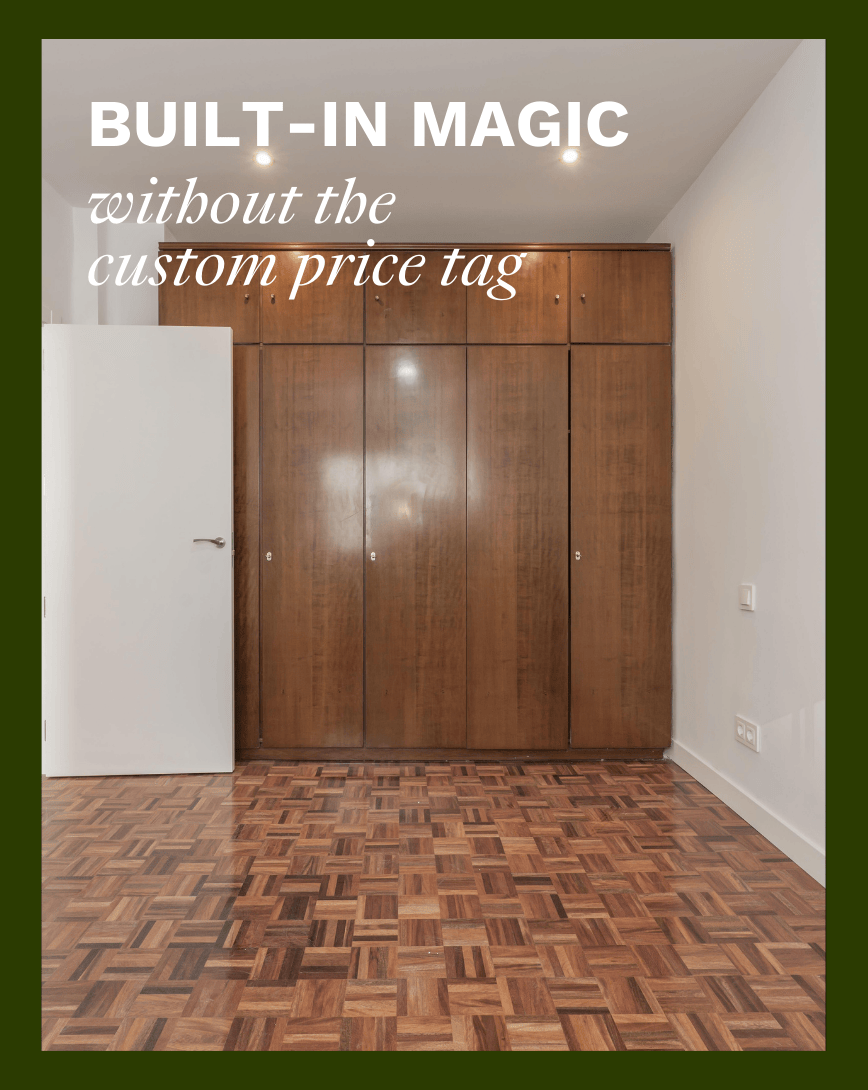
It’s not custom — it just looks that way.

  • Combine pre-made modular units with trim or panels to fake a built-in:
    • IKEA bookcases + crown molding = a wall of “custom” shelving.
  • Use beadboard or shiplap to unify walls with weird angles.
  • Add visual weight to small nooks by painting them the same color as adjacent walls.

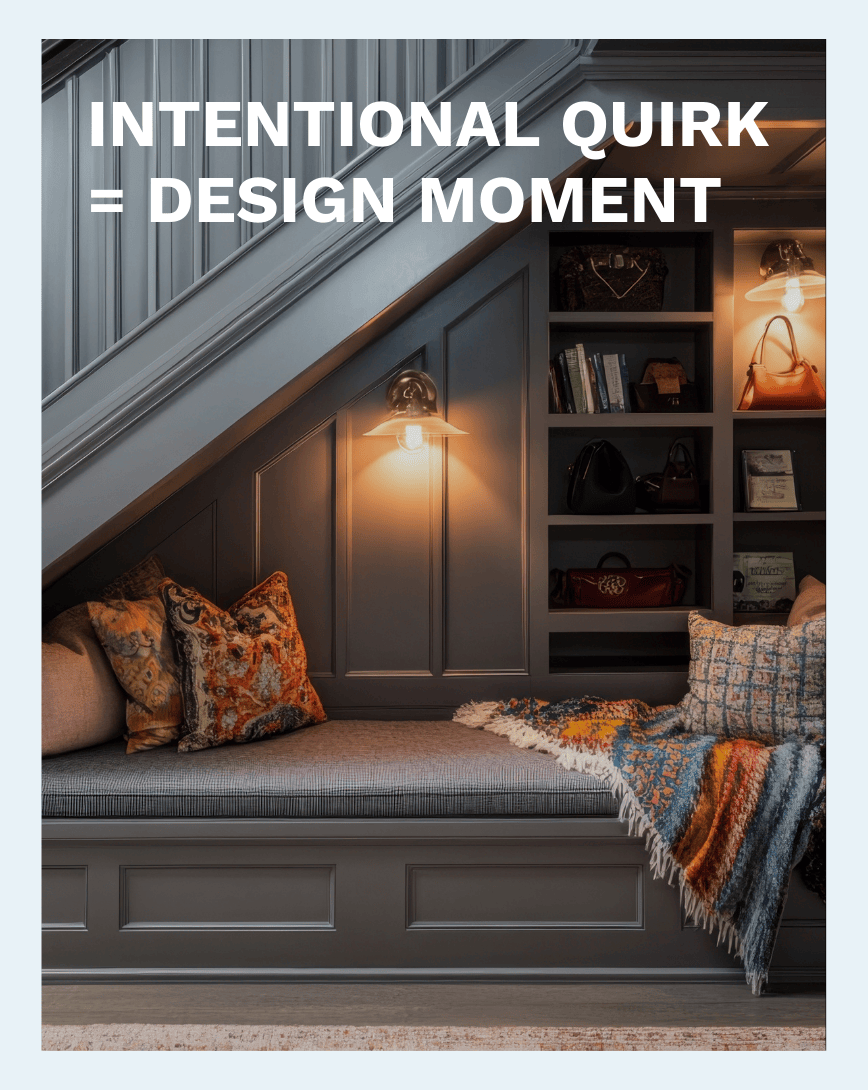
Example: Under-the-stairs spaces are prime real estate — turn them into a mini library, kid zone, or mudroom drop spot.
plus icon

If you can’t beat the weird, design around it.

  • Turn an odd alcove into a moment:
    • Add floating shelves and art.
    • Install a sculptural light fixture to draw the eye.
  • Layer rugs to define space when walls don’t cooperate.
  • Hang art asymmetrically to echo off-kilter walls in a way that feels... intentional.

Example: An off-center fireplace? Balance the asymmetry with a large-scale artwork or tall plant on the lighter side.
plus icon

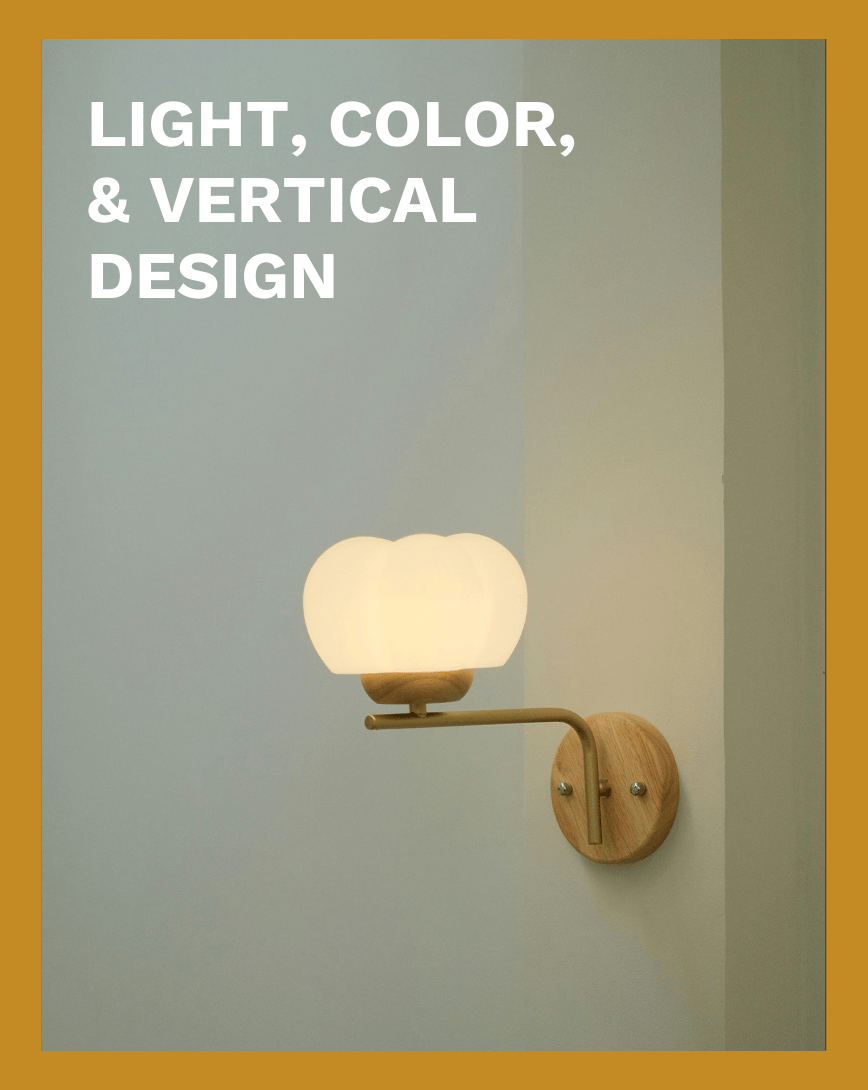
When in doubt, go up — and brighten up.

  • Sloped ceilings? Paint walls and ceilings the same shade to smooth visual lines.
  • Use sconces, pendant lights, or plug-in wall fixtures to spotlight forgotten corners.
  • Add mirrors to reflect light and double the perceived size.

Example: A room with one tiny window can be transformed with soft uplighting, pale walls, and a wall-length mirror.

plus icon
plus icon
plus icon
plus icon
plus icon
plus icon
plus icon
plus icon
plus icon
plus icon
plus icon
plus icon
plus icon
plus icon
plus icon

See a term missing you want to add? Let us know!
Thank you! Your submission has been received!
Please fill out all fields before submitting.
Thank you! Your submission has been received!
Oops! Something went wrong while submitting the form.

plus icon
plus icon
plus icon
plus icon
plus icon
plus icon
plus icon
plus icon
plus icon
plus icon
plus icon
plus icon
plus icon
plus icon
plus icon
plus icon
plus icon
plus icon
Spoak Tool Tip: Use the 2D planner to mock up several layout options before moving a single piece of furniture.
arrow left/previous
Previous Lesson
Designing Large Spaces
Next Lesson
How to Choose the Right Furniture Size
arrow right/next
arrow left/previous
Previous Lesson
Designing Large Spaces
Next Lesson
How to Choose the Right Furniture Size
arrow right/next

Want an overview of this lesson to keep on hand? Download one here!

Oops! Please fill out email field.

Put your new design skills into practice.

Join Now